
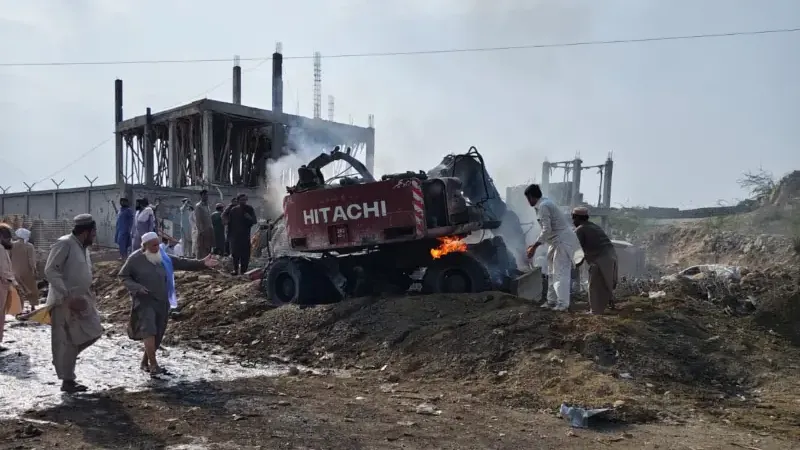
At least 12 people were killed and more than 30 injured on Saturday when an attacker rammed a vehicle packed with explosives into a police checkpost in Dera Ismail Khan’s Darazinda tehsil, officials said. Hours later, two rescue workers were shot dead when their ambulance came under fire while carrying bodies from the scene.
The attack
According to police and Rescue 1122, an unidentified attacker drove an explosives-laden tractor trolley into the Aman Mela checkpost. District Police Officer Ziauddin Ahmed confirmed it was a suicide attack.
Regional Police Officer Ghulam Mubashir Maken, citing an initial assessment, said those killed were civilians and a customs official, and that no police or security personnel were among the dead. The victims included nine men, two women and a child. Officials initially put the number of injured at 30; later reports put it at 35, of whom 25 were taken to the district headquarters hospital.
The blast destroyed a large part of the checkpost and flattened a neighbouring house. Local officials and residents said it could be heard from a considerable distance, and heavy gunfire followed. Excise personnel posted at the checkpost were unhurt, according to the district excise officer.
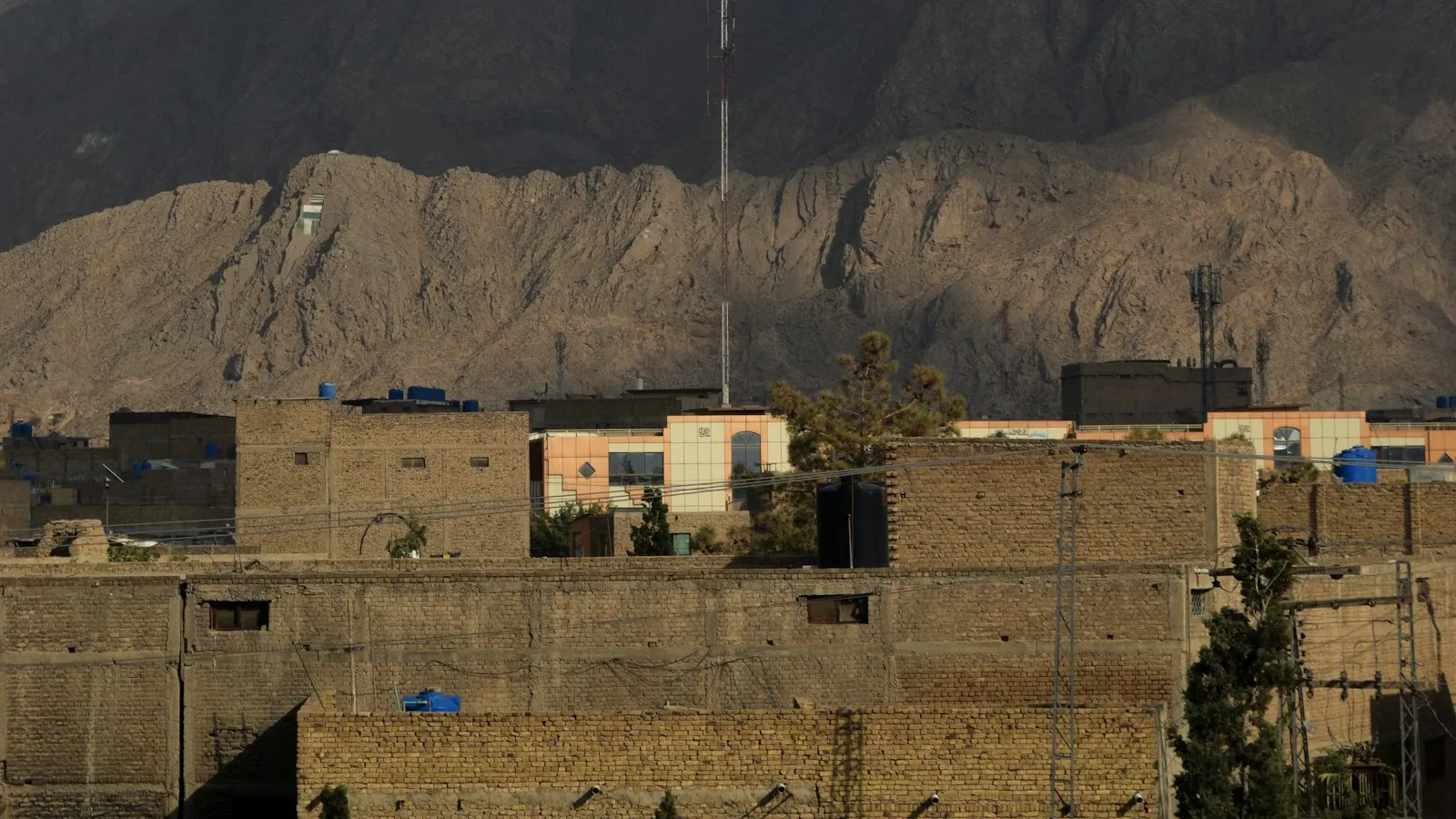
The Aman Mela checkpost sits on the DI Khan–Quetta road near Mughal Kot and Darazinda, close to the boundary between Khyber Pakhtunkhwa and Balochistan, and is used by police for security and anti-smuggling checks.
Ambulance attacked
In a second attack, gunmen opened fire on a Rescue 1122 ambulance transporting bodies from the blast site near Aman Mela. Two rescue workers, Sharifullah and Imtiaz, were killed and a third, Anees, was seriously injured. Rescue teams continued the operation despite the attack.
More than 25 rescue personnel, six ambulances and a fire vehicle took part in the relief effort, with four more ambulances sent from DI Khan. Rescue officials said mobile phone services were unavailable in the area during the operation.
Who was behind it
State broadcaster Radio Pakistan attributed the bombing to “Fitna al Khawarij”, the term the state uses for the banned Tehreek-i-Taliban Pakistan (TTP), and said a security operation was under way. Khyber Pakhtunkhwa Governor Faisal Karim Kundi described it as a conspiracy by “Fitna al-Hindustan Khawarij”. No group had publicly claimed responsibility in the initial reports.
Political reaction
President Asif Ali Zardari, Prime Minister Shehbaz Sharif and Interior Minister Mohsin Naqvi all condemned the attack. The prime minister said the government was determined to eradicate terrorism, while the interior minister said Khyber Pakhtunkhwa was on the front line of the fight. PPP Chairman Bilawal Bhutto-Zardari called it a painful reminder of the threat Pakistan faces and said sponsors of terrorism would be held accountable.
Chief Minister Sohail Afridi condemned the bombing in a video statement, pointed to funds allocated to the provincial police, and repeated his call for a “policy shift” by the federal government on counter-terrorism.
The attack quickly became entangled with national politics. Governor Kundi asked the PTI to call off its planned October 4 march on Islamabad, urging the chief minister to put political differences aside. “Our people are paying the price in blood,” he wrote on X. “They do not need test matches or long marches. They need peace.”
A rising toll in KP
The attack is the latest in a wave of violence in the province. On September 18, an attack on the old Police Lines in Kohat killed 23 people and injured around 100; eight attackers were killed in a clearance operation. Days later, Pakistan carried out what it called “calibrated” air strikes on militant hideouts in the border region with Afghanistan.
Earlier this month, police said they foiled a TTP attack on a checkpost in DI Khan’s Daraban area. According to data compiled by the Pakistan Institute for Conflict and Security Studies, mainland Khyber Pakhtunkhwa, excluding the merged tribal districts, recorded 54 terrorist attacks in August, up 50 per cent from 36 in July.
Why it matters
The bombing underlines both the scale of the security challenge in Khyber Pakhtunkhwa and the political tension between the federal and provincial governments over how to confront it. With the PTI’s march on Islamabad scheduled for next weekend, the attack is likely to intensify the argument over whether the province’s priorities should be political mobilisation or security, a debate playing out while families in DI Khan bury their dead.
This article draws on reporting published by Dawn and statements from police, Rescue 1122 and government officials.

Comments
Comments are reviewed by our editors before they appear. Please keep them civil and on topic. See our terms.
No comments yet. Be the first to share your view.