

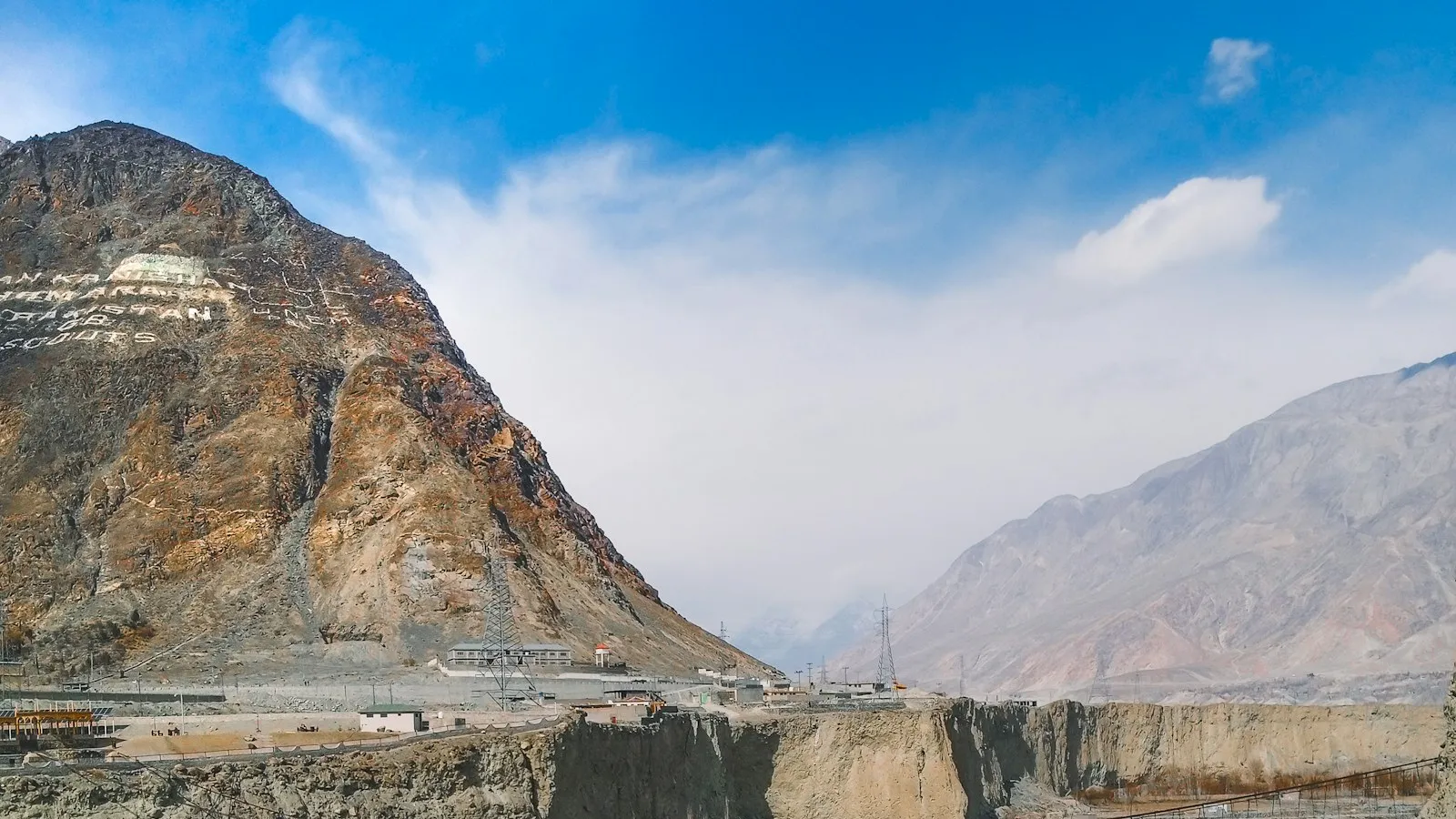
Construction of the Diamer-Bhasha Dam has reached a major milestone, with the formal start of extraction and transport of pozzolan, a key ingredient for the concrete of the main dam, from Gini in the Diamer district of Gilgit-Baltistan.
The material will be processed for use in roller-compacted concrete (RCC), the construction method for the dam’s main structure. Once processing is under way, placement of RCC for the main dam is set to formally begin at the site.
Why pozzolan matters
Pozzolan is a natural material that, when mixed with lime or cement, strengthens concrete and reduces the heat generated as it sets. That makes it especially valuable in massive concrete structures like large dams, where excessive heat can cause cracking. Sourcing it locally, from Gini, also saves the cost and time of transporting large volumes of material over long distances.
The project is divided into two main components: the main dam, and its associated sub-structures. Moving material for the main dam marks a shift into one of the most important phases of the work.
Coordination on the ground
The activity began on the directions of the Chairman of the Water and Power Development Authority (Wapda), retired Lieutenant General Muhammad Saeed, and Gilgit-Baltistan’s Chief Secretary, Arshad Majeed Mohmand.
Senior officials visited Gini to mark the occasion, including Diamer-Astore Division Commissioner Azim Ullah, the Chief Executive Officer of the Diamer Basha Development Company, Dr Nazakat Hussain, and Project Director Arif Ali, alongside representatives of consultants and contractors, local elders and religious leaders.
The commissioner and the company’s CEO pledged closer coordination to speed up construction. Local elders and ulema described the dam as instrumental for the socio-economic uplift of the area and reaffirmed their support for its early completion.
A national priority
The Diamer-Bhasha Dam, on the Indus River in Gilgit-Baltistan, is one of the largest infrastructure projects in Pakistan’s history. According to Wapda’s project specifications, the dam is designed to stand 272 metres high, which would make it one of the tallest roller-compacted concrete dams in the world, and to store about 8.1 million acre-feet of water, with an installed hydropower capacity of 4,500 megawatts.
Those numbers matter for three reasons:
- Water storage: Pakistan’s ability to store water is limited, and additional storage on the Indus helps regulate supplies for agriculture through dry periods.
- Clean electricity: Hydropower at this scale can supply low-cost, renewable electricity to the national grid.
- Flood management: A large reservoir upstream can help manage flood flows in the monsoon.
Water security in focus
The milestone comes at a time when water security is at the top of Pakistan’s national agenda. At the UN General Assembly this week, Prime Minister Shehbaz Sharif warned that any attempt by India to stop or divert Pakistan’s share of the Indus waters would be treated as an act of war. Building domestic storage on the Indus is a central part of Pakistan’s long-term answer to the pressures on its water supply, from climate change to upstream disputes.
What’s next
With pozzolan extraction under way, attention will now turn to the start of RCC placement on the main dam, the visible rise of the structure itself. Officials at the site said the priority is to keep up the pace of work through closer coordination between Wapda, the development company and the district administration.
This article draws on reporting published by Dawn. Dam specifications are as published by Wapda.



Comments
Comments are reviewed by our editors before they appear. Please keep them civil and on topic. See our terms.
No comments yet. Be the first to share your view.