

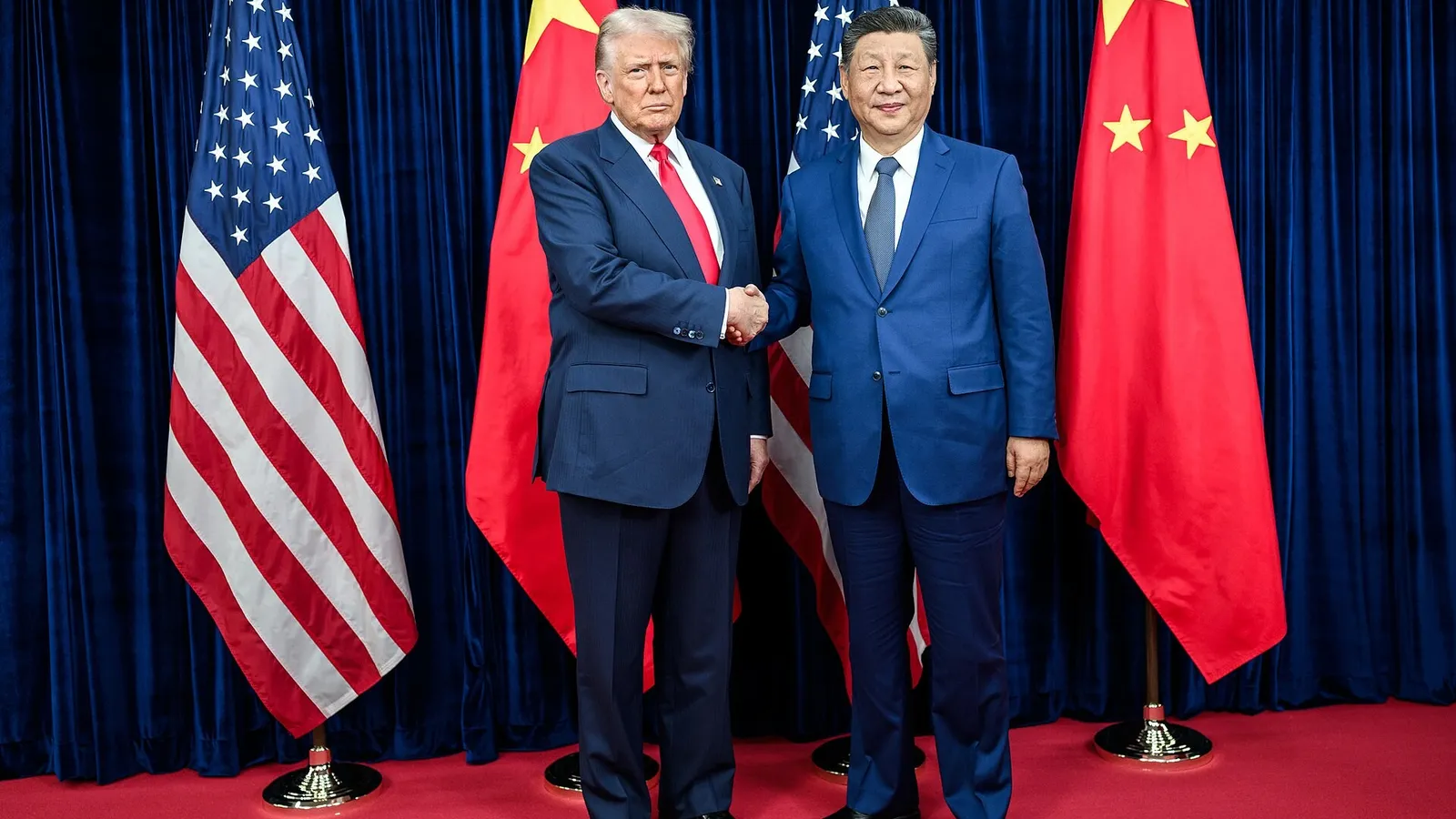
US President Donald Trump has described his summit with Chinese President Xi Jinping as “very productive”, promising that “tremendous things will be happening” between the world’s two largest economies. But the lavish state visit to the White House appeared long on ceremony and short on concrete results, with no sign of major breakthroughs on trade, security or Taiwan.
Warm words, limited substance
In a post on his Truth Social platform on Friday, Trump praised the meeting and said the two sides had found common ground on artificial intelligence, which, he wrote, Xi also preferred to call “super intelligence”. China’s foreign ministry responded diplomatically to the new term.
Trump pointed to progress under a bilateral trade mechanism, citing what he described as greater market access for American farmers and ranchers. Both leaders named artificial intelligence as an area where the two countries could cooperate.
Beyond those statements, however, neither side announced significant new agreements, and the summit’s symbolism, a state dinner and a planned visit together to the US National Archives, attracted more attention than its outcomes.
A visit to the National Archives
Trump said he would take Xi to the National Archives in Washington to see founding documents including the Declaration of Independence, the Constitution and the Bill of Rights, along with items marking the long history of exchanges between the two countries. He said both nations, like their ancestors, reached across the ocean “to trade, to learn, and to build a better world”.
China did not comment on the planned visit. Analysts suggested Xi might be particularly interested in records relating to 1979, when the United States switched its diplomatic recognition from Taipei to Beijing.
Taiwan at the centre
Taiwan was never far from the conversation. For years, Beijing has wanted Washington to say publicly that it opposes Taiwan’s independence, rather than repeating its long-standing formulation that it does not support it. China also wants an end to US arms sales to the island.
According to Chinese state media, Xi told Trump he hoped the United States would “handle the Taiwan question with prudence” and would “adhere” to a position of opposing Taiwan independence.
The United States, like most countries, does not have formal diplomatic relations with Taipei, but it is the island’s most important international backer and is required by US law to provide it with the means to defend itself.
The issue has taken on added significance because of the Trump administration’s recent approach to arms sales. The administration approved an $11 billion arms package for Taiwan in December, but after an earlier summit with Xi in May, Trump said he was holding back a second package worth about $14bn and called it “a very good negotiating chip”.
Craig Singleton of the Foundation for Defense of Democracies, a Washington think tank, argued that Xi’s choice of the word “adhere” suggested Beijing believes Washington is already acting as China would like. In his view, China may come to treat the current pause in arms sales as a permanent new baseline rather than a temporary one, with the aim of getting Trump to accept Chinese red lines as part of his own definition of a stable relationship.
Criticism at home
The summit drew criticism in Washington. Democrats in the Senate argued that Trump had come away with little of substance from Beijing, whether on trade, security, AI or human rights. They also faulted him for not publicly addressing China’s military pressure on Taiwan, and called for approved military aid and arms sales to the island to be delivered without delay.
Why it matters
Relations between Washington and Beijing shape the global economy, from trade flows and technology supply chains to security in the Asia-Pacific. Allies across Asia will be watching closely for any shift in how the United States talks about Taiwan following the visit. For countries like Pakistan, which maintains close ties with China while seeking stronger economic links with the United States, the tone of US–China relations matters for investment, trade and regional stability.
Reporting draws on accounts published by Dawn and Reuters.
Comments
Comments are reviewed by our editors before they appear. Please keep them civil and on topic. See our terms.
No comments yet. Be the first to share your view.