
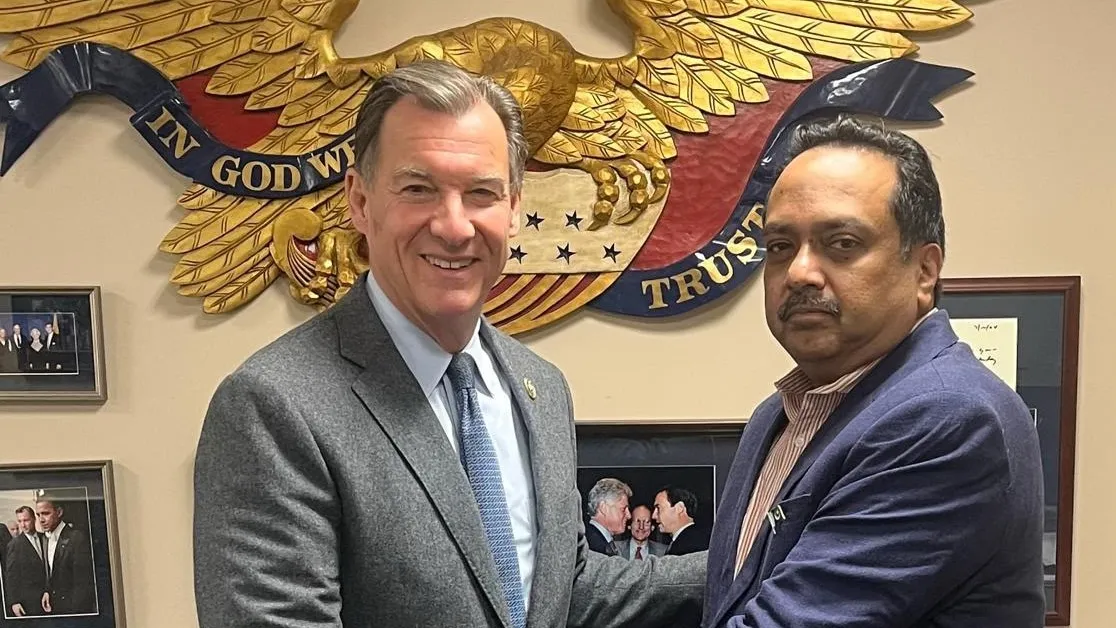
Pakistan suffers from terrorism more than any other country in the world, and the United States should do far more to help it, according to Congressman Tom Suozzi, chair of the Pakistan Caucus in the US Congress.
Suozzi made the remarks in New York during a meeting with foreign affairs expert Muhammad Mehdi, in which he set out a wide-ranging case for closer ties between Washington and Islamabad, from security cooperation and investment to a new effort to ease tensions between Pakistan and India.
‘People fail to realise’
Suozzi said the scale of Pakistan’s struggle against terrorism is widely underestimated abroad. “People fail to realise that Pakistan is really the victim of terrorism more than any other place in the world, even more than Burkina Faso,” he said, adding that the US must “do whatever we can to try and help our friends in Pakistan”.
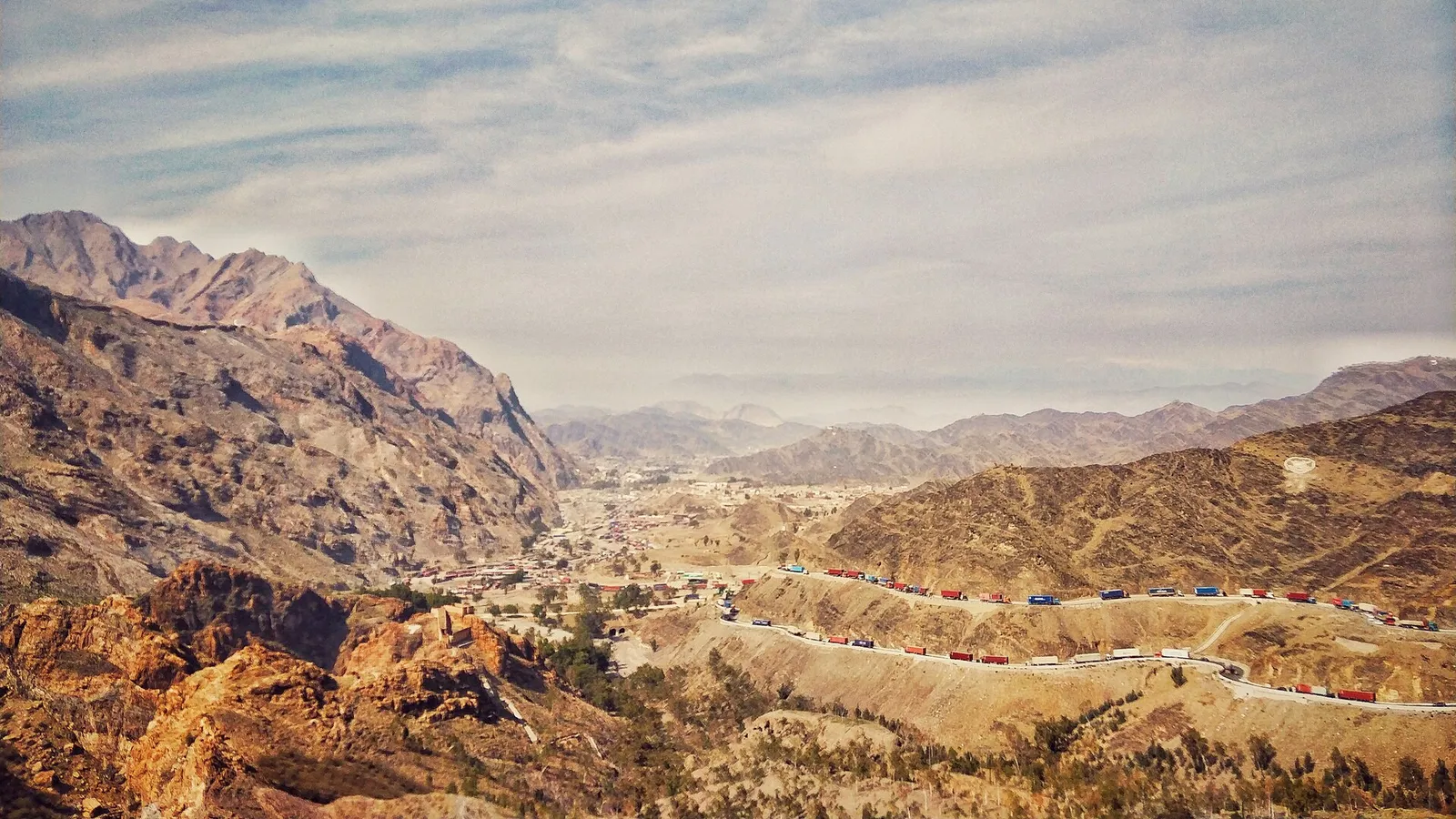
He compared the task facing Pakistan’s security forces with America’s own border challenges. The United States, he noted, struggles to secure a border that is largely flat and runs in a straight line. Pakistan, by contrast, must guard a frontier that runs through mountainous, sparsely populated and extremely difficult terrain, while “outside influences” carry out terrorist operations inside the country.
His proposals were specific. The United States, he said, should share intelligence with Pakistan, and should work to persuade its allies, including India, that it makes sense for Washington to sell Pakistan weapons for the purpose of defending itself against terrorism.
His comments come as Pakistan’s security forces press on with major counter-terrorism operations, including in Balochistan, where the military said this week that more than 71 terrorists had been killed in four days, and as Islamabad rejects Kabul’s attempts to shift blame for militancy onto Pakistan.
‘A trusted advisor’ in the region
Suozzi described Pakistan as an increasingly trusted partner of the United States, with deep relationships across South Asia, the Middle East and beyond, including with countries that are adversaries of Washington. That, he argued, allows Pakistan to act as a trusted adviser that can help reconcile differences between the US and its rivals.
He pointed in particular to Pakistan’s current role between the United States and Iran, saying Washington needs to recognise “the tremendous credibility that Pakistan has in the region”. The comments echo the praise Pakistan received at the UN this week, where Secretary General António Guterres commended its mediation efforts.
Unlocking investment
Turning to the economy, the congressman said Pakistan has enormous potential, citing its large youth population, natural resources and talented people, and said economic ties should be at the centre of the relationship between the two countries.
To attract more foreign investment, he suggested that Pakistan set up an independent arbitration board, similar to one in Kazakhstan, to settle disputes between foreign companies and local parties on the basis of common law. Its panel would include Pakistani, American and British lawyers and judges. Such a body, he said, “would unlock a tremendous amount of economic investment in Pakistan”.
The idea fits with the government’s own push for investors, after Prime Minister Shehbaz Sharif told American business leaders in New York this week that Pakistan’s economy has stabilised and is ready for growth.
Kartarpur as a bridge to India
Suozzi also spoke about relations between Pakistan and India. He recalled that during his most recent visit to Pakistan, in 2025, he chose to travel to Kartarpur Sahib, the Sikh holy site, and said he was the first member of the US Congress ever to go there.
He said he picked Kartarpur deliberately, because at the time it was the only place where India and Pakistan still had some form of contact, allowing pilgrims to cross from India to visit the site. He hopes it can now become “a vehicle to lessen the tensions” between the two countries.
Acknowledging the long history of hostility, Suozzi said both sides “have to start somewhere”. After the conflicts of the past two years, he said, the Kartarpur crossing should be reopened, followed by cultural contact. He suggested a cricket match between the two countries, played once in Pakistan and once in India, or in the United States if necessary.
Mehdi: a balanced doctrine
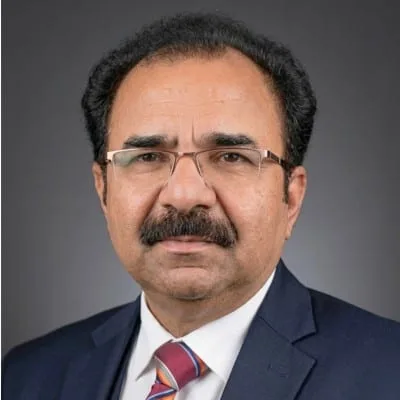
Muhammad Mehdi said Pakistan continues to follow a balanced foreign policy, and that its trade and diplomatic channels remain able to bridge divides between global powers. He pointed to Pakistan’s historic role in helping to open the way for the rapprochement between the United States and China in the early 1970s.
He added that better access to US markets for Pakistani goods, together with structural civilian reforms, would be essential to lasting economic alignment between the two countries.
Why it matters
Support from the chair of the Pakistan Caucus carries weight on Capitol Hill. Suozzi’s argument, that Pakistan is a front-line victim of terrorism which deserves intelligence, equipment and investment rather than suspicion, is one Islamabad has made for years. Hearing it from a senior American lawmaker, alongside practical ideas on investment and on easing tensions with India, strengthens Pakistan’s case in Washington at a time when its diplomatic standing is rising.
This article is based on remarks shared with The Indus Compass.

Comments
Comments are reviewed by our editors before they appear. Please keep them civil and on topic. See our terms.
No comments yet. Be the first to share your view.