

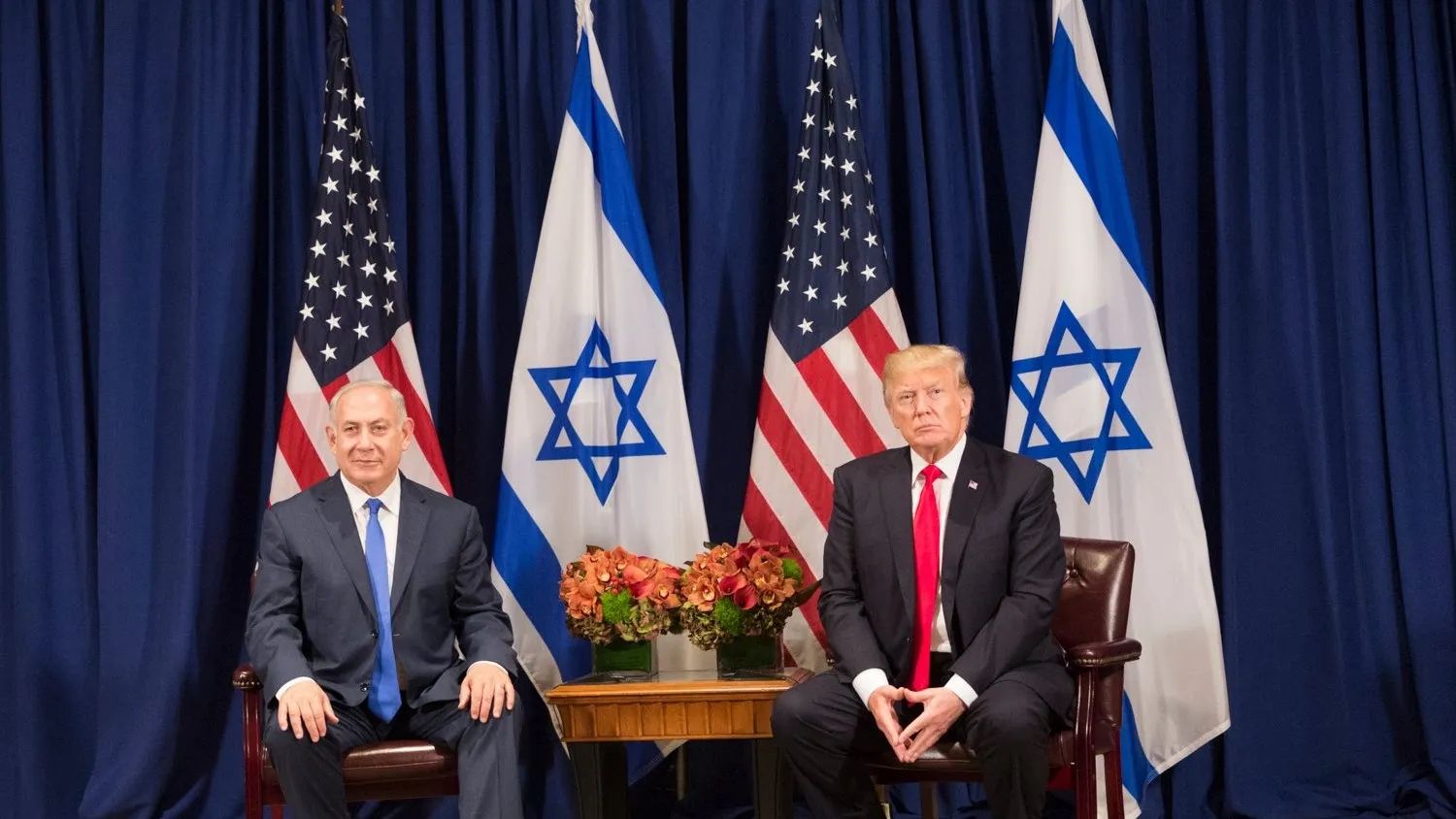
Dozens of diplomats walked out of the United Nations General Assembly hall in New York on Thursday as Israeli Prime Minister Benjamin Netanyahu rose to speak, while hundreds of demonstrators gathered in the streets outside to protest against Israel’s conduct of the war in Gaza.
The two scenes, an emptying chamber inside and crowded streets outside, captured the pressures bearing down on Netanyahu, who faces mounting isolation abroad and a general election at home on October 27 that could decide his political future.
A combative speech to a half-empty hall
Delegations began leaving as soon as Netanyahu started his address, leaving large sections of the hall visibly empty as he set out Israel’s case to the international community.
Netanyahu was defiant. He accused his critics of hypocrisy, called them “moral cowards”, and rejected allegations that Israel had committed genocide in Gaza, arguing instead that Israel had prevented one. He defended Israel’s military operations in Gaza and elsewhere in the region.
A notable portion of the speech was aimed not at a foreign government but at New York’s mayor, Zohran Mamdani, whom Netanyahu labelled antisemitic and accused of spreading falsehoods about Israel.
Mamdani, who had chosen not to join the street protests, hit back after the speech, accusing Netanyahu of repeating “baseless lies” and noting that the International Criminal Court has issued a warrant for Netanyahu’s arrest over alleged war crimes and crimes against humanity, which remains in force. The mayor has previously said that the city does not have the power to enforce the ICC warrant itself. The evening before, he had hosted Palestinian families from Gaza at Gracie Mansion, his official residence, where they planted an olive tree together.
Netanyahu’s visit was brief. Citing security concerns and the prospect of large protests, his schedule was cut back so that he flew in on Thursday morning, delivered his speech and was due to fly home the same evening.
Arrests on First Avenue
Outside the UN, the demonstrations were large and varied. Jewish and Muslim activists, supporters of the Palestinian cause, human rights campaigners, progressive Jewish organisations, politicians, artists and musicians all took part in separate protests across Manhattan, united mainly by their opposition to the Israeli government’s policies in Gaza.
The biggest direct action was organised by the New York chapter of Jewish Voice for Peace, which brought hundreds of people to the junction of First Avenue and 39th Street. Protesters in matching white T-shirts sat down in the road, linked arms and blocked traffic while chanting against Netanyahu and US support for Israel.
Police moved in to clear the road. At least 30 people were arrested in the first wave, and police later said more than 100 had been taken into custody. Those detained included actors Susan Sarandon and Hannah Einbinder, New York City Council member Chi Ossé and congressional candidate Darializa Avila Chevalier. Several other well-known figures, including musicians Julien Baker and Lucy Dacus and actor Elliott Page, also joined the protests.
Divisions within the Jewish community
The day also exposed divisions among New York’s Jewish organisations. A coalition of progressive Jewish groups, among them New York Jewish Agenda, T’ruah, J Street and the New Israel Fund, held a separate rally at Dag Hammarskjöld Plaza near the UN, telling Netanyahu he was not welcome. The rabbinic human rights group T’ruah called for a ceasefire and for accountability over alleged war crimes.
That rally was met by pro-Netanyahu counter-protesters with whistles and megaphones, while the ultra-Orthodox anti-Zionist group Neturei Karta staged its own demonstration.
A generational shift
Many of the protesters were young, among them students, activists and first-time politicians, reflecting a broader shift in American opinion. A Pew Research Center survey conducted in May found that just 18 per cent of Americans aged 18 to 29 held a favourable view of the Israeli government, compared with 47 per cent of those aged 65 and over.
Why it matters
The walkout was one of the clearest signs yet of Israel’s diplomatic isolation at the UN, where the General Assembly has become a stage for global frustration over the war in Gaza. For Netanyahu, the combination of a diplomatic boycott abroad and a tight election at home makes the coming weeks especially consequential. For the United States, Israel’s most important ally, the scenes on the streets of New York pointed to a debate over Israel that is changing, particularly among younger voters.
Reporting draws on accounts published by Dawn and Reuters.


Comments
Comments are reviewed by our editors before they appear. Please keep them civil and on topic. See our terms.
No comments yet. Be the first to share your view.